 Carter Vale
 Peru is one of those rare places where history isn’t tucked behind museum glass — it lives on the streets, in the kitchens, and in the voices of the people who carry ancient traditions into the present. You don’t just visit Peru; you feel it. You taste it. You learn from it.
Yet many travelers make the same mistake: they rush to Machu Picchu, snap the postcard photo, and leave believing they’ve “done” Peru. But Peru is not a checklist destination — it is a tapestry. Its culture is layered, its food is philosophy, and the magic only reveals itself if you slow down and pay attention.
If you want to truly experience Peru’s culture and gastronomy — not just skim the surface — this is your guide. It’s not about restaurant lists or Instagram stops. This is about immersion, understanding, and savoring.

Start Where It All Begins: The Markets
If Peru’s cuisine is the soul of the country, the markets are its beating heart. Forget polished eateries for a moment — go where the grandmothers shop, where chefs go at dawn, where the fruit looks like art and the air smells like spices, fish, and possibility.
Must-visit styles of markets:
- Mercado Central markets in each major city
- San Pedro Market (Cusco) for Andean staples
- Surquillo Market (Lima) for seafood and produce
- Local mercados in small towns — where traditions run deepest
What to try:
- Lucuma smoothies
- Fresh cheese and bread
- Herbal teas, especially muña and mate de coca
- Rocoto peppers and ají pastes
- Choclo (giant Andean corn)
Stand at a juice stall. Watch the butcher wrap up meat. Listen to vendors call out specials. Taste first, ask questions, then taste again. A market visit isn’t errand-running here — it’s a cultural lesson dressed as breakfast.
Learn the Stories Behind the Dishes
Peruvian cuisine isn’t just “fusion”; it is a living history book. Every plate tells a migration story, a trade relationship, a moment in history.
- Ceviche: Born from the cold Pacific currents and ancient preservation methods.
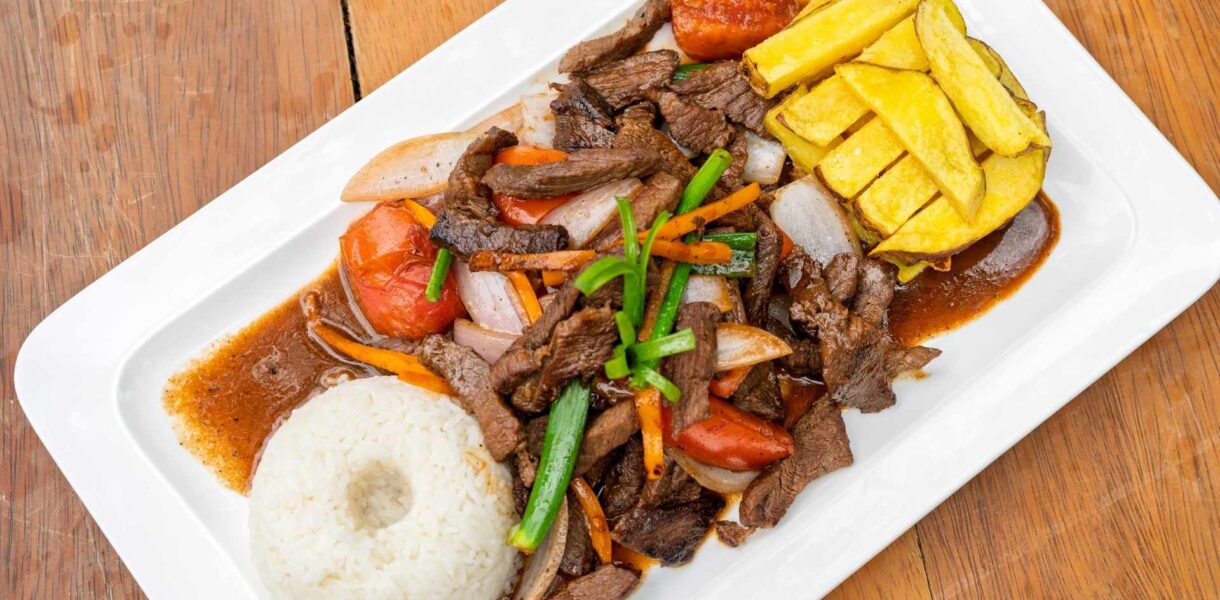
- Lomo saltado: Stir-fried evidence of Chinese immigration.
- Causa: A potato dish rooted in pre-Columbian agriculture and wartime sustenance.
- Pachamanca: Earth-oven cooking that predates the Incas.
- Nikkei cuisine: Where Japanese elegance meets Andean ingredients.
Understanding why a dish exists makes tasting it infinitely richer.
Go Beyond Lima — But Don’t Skip It
Lima is the crown jewel of Peruvian dining. Its chefs aren’t just cooking; they’re redefining food as national storytelling. But Peru is not Lima alone.
Lima gives you:
- World-class restaurants and experimental cuisine
- Pacific seafood at its freshest
- Urban food culture and culinary schools shaping the future
Cusco gives you:
- Traditional Andean cooking
- Hearty dishes designed for altitude and agriculture
- Pachamama traditions and ancestral flavors
The Sacred Valley gives you:
- Farm-to-table in the literal sense — many restaurants grow their own produce
- Indigenous cooking techniques passed down for centuries
- Corn, potatoes, quinoa, trout, and wild herbs
The Amazon gives you:
- Tropical fruits you’ve never heard of
- Ingredients from river and jungle
- Techniques rooted in native Amazonian communities
The lesson? Peru’s cuisine changes as the mountains do — dramatically and beautifully. You need to follow the terrain to understand the plate.
Eat the Street Food
Some travelers hesitate with street food. Don’t — not here. Peru’s culinary reputation began at street level, not in Michelin-style dining rooms.
Try:
- Anticuchos (grilled beef heart skewers)
- Butifarras (pork sandwiches)
- Empanadas hot from the oven
- Marinated olives
- Papa rellena (stuffed potato)
- Piccarones (sweet pumpkin doughnuts with molasses)
Be smart — choose stands with lines and locals. Bonus if the vendor looks like they’ve been doing this longer than you’ve been alive.
Join in a Traditional Meal — or Ceremony
There are experiences that don’t fit on a restaurant reservation system:
- A pachamanca cooked in an earthen oven with stones
- A farm lunch in the Sacred Valley overlooking terraced fields
- A communal meal in an Andean village
- Amazonian meals prepared with foraged herbs and river fish
You don’t just taste food — you learn gratitude. Every meal comes with context: land, history, effort, and family.
Visit a Picantería in Arequipa
Arequipa has its own rhythm — elegant, volcanic, deeply local. And picanterías (traditional lunchtime taverns) are sacred spaces of food culture.
Here, you sip chicha, eat slow-cooked stews, and share long wooden tables with strangers who quickly feel like friends. It is rustic dining at its finest — fiery, comforting, emotional.
Drink as the Locals Do
Peru’s beverages are part of its identity.
Try:
- Chicha morada (purple corn drink — sweet and ancient)
- Pisco sour (the national cocktail — sip slowly)
- Emoliente (night-street herbal drink, restorative)
- Mate de coca (for altitude)
- Amazonian fruit juices you’ve never heard of
And yes, try pisco straight — the spirit speaks for itself.
Respect the Land and the People
Peruvian food isn’t flashy by accident — it’s rooted in biodiversity and Indigenous knowledge.
From 4,000 potato varieties to salt harvested by hand in Maras, from Amazonian cacao to quinoa fields at 12,000 feet — every ingredient has a guardian and a story.
When you eat here:
- Support small producers and local restaurants
- Ask questions respectfully
- Appreciate ancestral techniques
- Recognize that food is identity, not entertainment
Culture is not a museum; it’s a relationship. Treat it with humility.
Learn a Little Quechua — Yes, Really
Even a few words will unlock smiles:
- Allin p’unchay — good morning
- Sulpayki — thank you
- Tupananchiskama — until we meet again
Quechua is not a relic; it is a living thread in Peru’s cultural fabric. Attempting it honors that fact.
Slow Down. Savor. Listen.
If there’s one rule, it’s this:
Do not rush Peru.
Long meals. Long walks. Long conversations. Food here isn’t fast — it is ritual. Culture isn’t performance — it is presence. If you want to understand Peru, you need to breathe with it, one dish at a time, one conversation at a time, one mountain at a time.
Because Peru is not just a place you remember — it is a place that remembers you, if you let it.
Final Thought
There are countries you visit for scenery. There are countries you visit for food. And then there is Peru — where the scenery feeds the food, the food feeds the culture, and the culture feeds your soul.
Come hungry. Come curious. Come open.
Because the greatest gift Peru gives you isn’t a dish or a photo —
it’s the feeling of being welcomed into something ancient, alive, and profoundly human.