
 TFC
TFC When travelers plan food-focused trips to Europe, the usual suspects dominate: pasta in Italy, pastries in France, tapas in Spain. Entire itineraries are built around Michelin stars and Instagram-famous bakeries.
Almost no one says, “Let’s go to Bosnia.”
And that might be Europe’s greatest culinary oversight.
Tucked between Croatia, Serbia, and Montenegro, Bosnia and Herzegovina is small, often misunderstood, and rarely marketed as a gastronomic destination. But beneath its modest tourism profile lies one of the most layered and emotionally resonant cuisines on the continent.
This is not flashy food. It’s not plated for social media. It’s not reinvented for trends.
It’s inherited.
A Cuisine Built at the Crossroads of Empires
Bosnia’s food tells the story of its geography.
For centuries, the region stood at the intersection of Ottoman rule, Austro-Hungarian administration, Slavic traditions, and Mediterranean trade routes. Instead of replacing each other, these influences layered.
From the Ottoman era came grilled meats, filled pastries, and coffee rituals. From Central Europe came stews, breads, and structured dining traditions. Local Balkan ingredients — dairy, cabbage, peppers, lamb — tied everything together.
The result isn’t fusion in the modern sense.
It’s evolution.
Every dish carries history without announcing it.
Ćevapi: The National Ritual
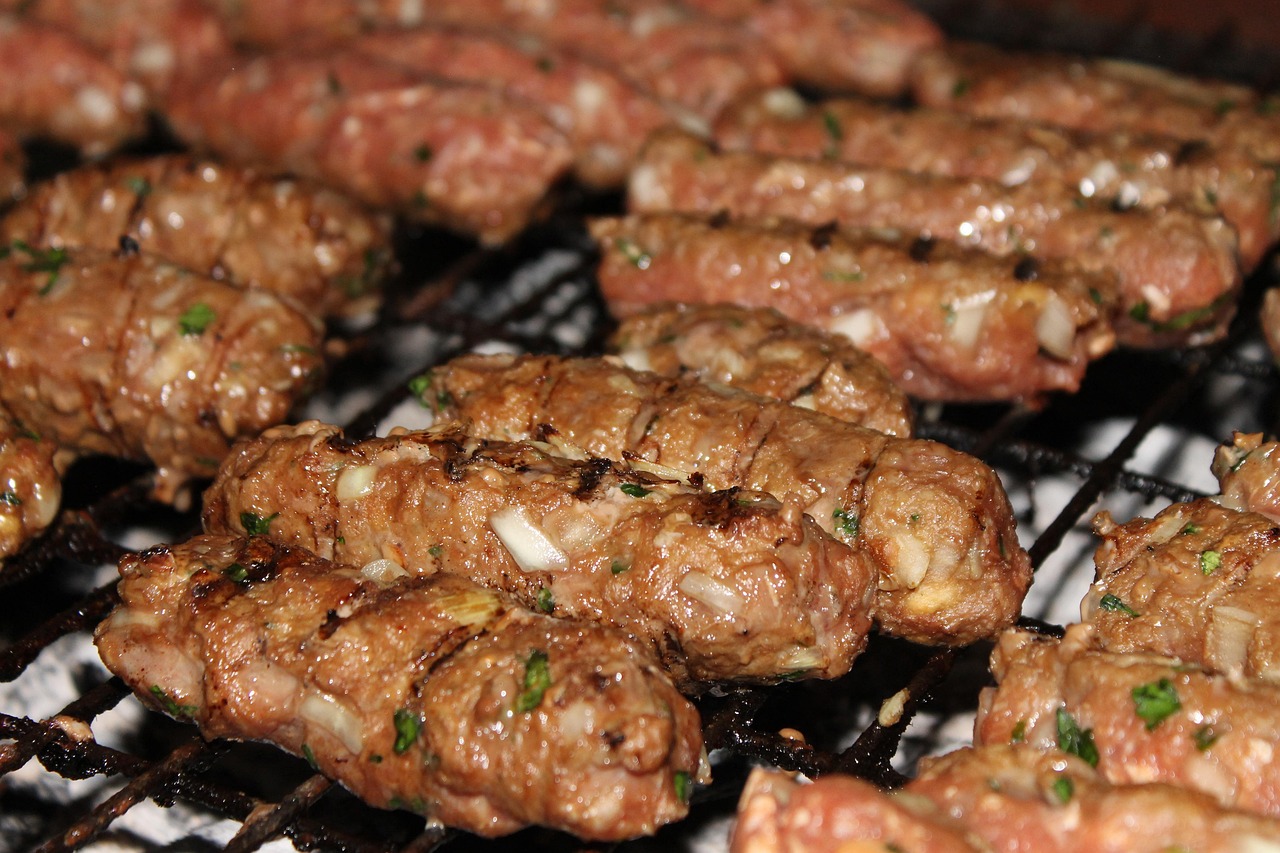
If Bosnia had a culinary anthem, it would be ćevapi.
Small, skinless sausages made from minced meat (typically beef, sometimes blended with lamb), lightly seasoned and grilled over open flame. They’re served inside somun bread — soft, slightly charred flatbread — alongside chopped raw onions and kajmak, a rich dairy spread somewhere between clotted cream and fresh cheese.
On paper, it sounds simple.
In reality, it’s precision disguised as modesty.
The meat must be tender but structured. The grill heat must caramelize without drying. The somun must absorb juices without falling apart.
And then there are regional debates.
In Sarajevo, ćevapi are small and served in sets of five or ten. In Banja Luka, they’re shaped longer and pressed together in a rectangular block. Ask a local which is better, and you’ll get a passionate answer.
Ćevapi are eaten quickly, often standing, sometimes late at night. They are democratic — enjoyed by students, families, taxi drivers, and business professionals alike.
No performance. Just satisfaction.
Slow Cooking Without Calling It “Slow Food”
Long before the global slow food movement became trendy, Bosnia was practicing it naturally.
Take begova čorba, often translated as “Bey’s soup.” It’s a velvety chicken and okra soup thickened through patience, not shortcuts. Vegetables soften gradually. Flavors develop gently.
Or bosanski lonac, a traditional stew layered in a clay pot with meat and seasonal vegetables. It cooks for hours, untouched, allowing steam and time to do the work.
These dishes are not rushed because historically, they couldn’t be.
Cooking was an all-day affair. Meals were communal. Time was ingredient number one.
Even pita requires rhythm. Unlike Middle Eastern pita bread, Bosnian pita refers to thin, hand-stretched dough filled with meat (burek), cheese (sirnica), spinach (zeljanica), or potatoes (krompiruša).
And here’s something locals insist on: only meat-filled pastry is called burek. Everything else is pita. It’s a small distinction — but one that reflects deep cultural pride.
The Power of Preservation
Bosnian cuisine is shaped by seasons.
Winters are cold. Preservation mattered historically.
Cabbage becomes sauerkraut. Peppers are roasted and stored. Meats are cured or smoked. Ajvar — a roasted red pepper spread — appears on tables as both condiment and comfort.
Sarma (cabbage rolls stuffed with meat and rice) is especially tied to winter and gatherings. It’s not just dinner. It’s event food.
You rarely cook one sarma. You cook dozens.
The act itself becomes communal.
Coffee as Connection
If you want to understand Bosnia, sit for coffee.
Bosanska kafa is prepared in a small copper pot called a džezva and served in delicate cups, often with sugar cubes and sometimes lokum (Turkish delight).
But the ritual matters more than the caffeine.
You don’t order it to-go. You don’t rush it between errands.
You sit.
Conversations stretch for hours. Silence is allowed. Reflection is normal.
In Sarajevo, cafés are full not because of productivity culture — but because social connection remains central.
Coffee is hospitality. It’s pause. It’s continuity.
Why It Remains Underrated
So why isn’t Bosnia on every foodie’s radar?
First, marketing.
Unlike Italy or France, Bosnia doesn’t aggressively brand its cuisine internationally. There are few celebrity chefs exporting it abroad. Few glossy campaigns.
Second, history.
The 1990s conflict shaped global perceptions of the region for years. Tourism recovery has been steady but understated.
Third, authenticity.
Bosnian food hasn’t been extensively adapted for international tastes. It remains rooted in local rhythm.
There are no foam-topped reinterpretations of sarma. No deconstructed ćevapi tasting menus.
What you get is what families have cooked for generations.
And for some travelers, that groundedness feels refreshing.
The Emotional Factor
Perhaps what makes Bosnian cuisine stand out most is emotional density.
These recipes survived political shifts, economic hardship, and social change.
They were cooked during celebrations and during scarcity.
Food became stability.
And that emotional inheritance shows up on the plate.
You feel it in the warmth of bread, the richness of stew, the comfort of grilled meat eaten among locals who’ve been eating it the same way for decades.
Europe’s Quiet Culinary Powerhouse
In a continent where food is increasingly curated for global audiences, Bosnia feels different.
It feels intact.
You won’t find endless vegan reinterpretations or experimental tasting counters on every corner. What you’ll find instead are grill houses filled with regulars, bakeries selling out by mid-morning, and families stretching dough by hand in kitchens that smell like butter and memory.
Bosnia and Herzegovina may not dominate travel headlines.
But when it comes to deeply satisfying, historically layered, emotionally grounded cuisine — it quietly outperforms expectations.
And perhaps that’s the definition of underrated.